Introduction
The global foreign exchange markets are facing a new wave of uncertainty as the U.S. dollar, traditionally the strongest and most traded currency, has come under pressure. A criminal investigation into the Federal Reserve Chair Jerome Powell has sparked turmoil in global markets, leading to a significant depreciation of the dollar. This news comes at a time when investors are already navigating a complex landscape of economic data, geopolitical concerns, and central bank policies.
In this article, we delve into the broader implications of this development, exploring the impact on the forex market, the potential consequences for the U.S. economy, and how this might influence global economic trends in the coming months.
Criminal Investigation Into Jerome Powell: A New Crisis For The U.S. Dollar
The U.S. dollar has always been a safe haven for investors, thanks to the strength of the American economy and the policies set by the Federal Reserve. However, the sudden announcement of a criminal investigation into Federal Reserve Chairman Jerome Powell has created an environment of uncertainty that is reverberating through global financial markets. This unexpected development has left investors questioning the stability of the U.S. monetary policy and the potential for a shift in the Federal Reserve’s approach toward interest rates and inflation control.
What Is The Nature Of The Investigation?
The investigation centers around allegations that Powell, as the head of the Federal Reserve, may have engaged in actions that are seen as compromising the independence of the central bank. While specific details of the investigation remain under wraps, the mere fact that a criminal probe is underway has caused many to question the integrity of the Federal Reserve’s leadership. The market is sensitive to any disruption in the Fed’s decision-making processes, and this investigation has cast a shadow over Powell’s leadership, raising concerns about political interference in what has traditionally been a non-partisan institution.
As news of the investigation spread, investors began to pull back from the U.S. dollar, fearing that the controversy could lead to policy uncertainty. This fear was reflected in the market, with the U.S. dollar experiencing a significant drop against major global currencies.
The Reaction Of Forex Markets: Dollar Weakness Across The Board
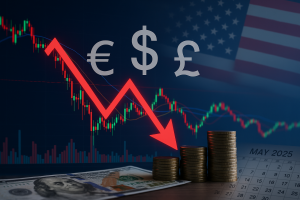
The most immediate effect of the criminal investigation has been the weakening of the U.S. dollar. Since the news broke, the dollar has faced significant losses against major currencies such as the euro, the Japanese yen, and the British pound. The global foreign exchange market, which is highly sensitive to geopolitical events and central bank policies, has responded with caution.
Dollar’s Loss Against the Euro and Yen
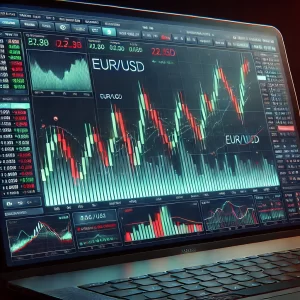
The euro has seen a notable rise against the dollar, as the European Central Bank (ECB) is perceived as more stable, especially compared to the uncertainty surrounding the U.S. Federal Reserve. The EUR/USD pair has experienced substantial movements as a result of this shift, with the euro gaining strength on expectations that the ECB will remain committed to its current monetary policy despite external pressures.
Similarly, the Japanese yen, traditionally viewed as a safe-haven currency, has strengthened against the dollar. Japan’s central bank, while still engaged in an accommodative monetary policy, has not been embroiled in the same level of controversy as the Federal Reserve. As a result, the yen has attracted more investors looking for stability in an environment of uncertainty.
The British pound has also gained against the dollar, reflecting a shift in investor sentiment. While the UK economy faces its own set of challenges, including the lingering effects of Brexit and inflationary pressures, the pound has benefited from the weakening of the dollar.
The Broader Impact on Emerging Market Currencies
Emerging market currencies are also feeling the effects of the U.S. dollar’s decline. As the dollar weakens, currencies in countries such as Brazil, India, and South Africa have seen a modest rebound. These countries typically have strong trade relations with the United States, and a weaker dollar can improve their export competitiveness. However, this improvement is not without its challenges, as many emerging market economies are also grappling with inflationary pressures and high levels of debt.
The Federal Reserve’s Role In The U.S. Dollar’s Downturn
The Federal Reserve has long been the cornerstone of the U.S. dollar’s strength. Its decisions on interest rates and monetary policy have a direct influence on the value of the dollar in the global market. With the Fed facing scrutiny from the criminal investigation into Jerome Powell, there is growing uncertainty about the central bank’s future course of action.
How Will the Investigation Affect the Fed’s Policy?
If the investigation into Powell leads to significant changes in the leadership of the Federal Reserve, it could disrupt the bank’s policy agenda. This could potentially lead to a shift in monetary policy, including changes to interest rates, asset purchases, and inflation management strategies. Any of these developments could further erode investor confidence in the U.S. dollar.
Additionally, the ongoing political pressure on the Fed could lead to concerns about political interference in its decision-making process. The Fed’s primary responsibility is to manage inflation and ensure economic stability, and if the central bank’s independence is compromised, it could lead to a loss of credibility in the eyes of both investors and the public.
What Does This Mean for the U.S. Economic Growth?
The uncertainty surrounding the Federal Reserve could have broader implications for the U.S. economy. If the investigation leads to a deterioration in confidence in the Fed’s ability to manage inflation and promote economic stability, it could affect business investment, consumer spending, and job growth. This would have a ripple effect across global markets, as the U.S. is one of the largest economies in the world.
The Outlook For The U.S. Dollar: What Lies Ahead?
Looking ahead, the outlook for the U.S. dollar remains uncertain. While the immediate impact of the criminal investigation into Jerome Powell has been significant, it is important to remember that the U.S. dollar is still the world’s dominant reserve currency. It remains the preferred currency for global trade, investment, and central bank reserves, and it is likely to retain its position as the world’s reserve currency for the foreseeable future.
However, the political turmoil surrounding the Federal Reserve could lead to continued volatility in the dollar in the short term. If Powell’s leadership is called into question, or if the investigation leads to a change in Fed policy, the dollar could face additional pressures.
Potential Scenarios For The Dollar’s Future
Continued Dollar Weakness: If the investigation intensifies and leads to a shift in U.S. monetary policy, we could see continued weakness in the dollar. This could lead to further appreciation of other currencies, particularly the euro and the Japanese yen.
Recovery in the Dollar: On the other hand, if the investigation does not lead to significant changes in the Fed’s policy or leadership, the dollar could recover as investors regain confidence in the strength of the U.S. economy. This would likely be supported by any positive economic data coming from the U.S. and any indications that the Fed will continue its current approach to interest rates.
Prolonged Volatility: The most likely scenario in the short term is prolonged volatility in the forex markets. As the investigation unfolds and more details emerge, investors will remain cautious. This could result in erratic movements in the dollar, with traders closely monitoring any new developments related to the probe.
Conclusion
The U.S. dollar’s decline following the criminal investigation into Jerome Powell is a stark reminder of the delicate balance between economic policy, political stability, and market confidence. The Federal Reserve has long been a pillar of trust for investors, and any threat to its independence can have significant ramifications for the global economy.
While it is too early to predict the long-term effects of this investigation, the immediate consequences for the U.S. dollar are clear. Investors are nervous, and the forex markets are reacting with caution. Whether this marks the beginning of a prolonged period of dollar weakness or if the currency can recover remains to be seen.